
Lift ev’ry voice - Music by Edryn Coleman
Arranged and Adapted by Dr. Edryn J. Coleman (b. 1983) Text by James Weldon Johnson and Katharine Lee Bates
Lift ev'ry voice and sing with harmony from sea to shining sea. Let our rejoicing rise, let it rise high as the list'ning skies, Let it resound loud as the sea, the rolling sea from sea to shining sea. Lift ev'ry voice and sing.
To honor our 30th anniversary milestone, we collaborated with acclaimed local Maryland composer and educator Dr. Edryn J. Coleman, who beautifully adapted his existing arrangement specifically for this celebration. Deeply committed to community-centered music, Dr. Coleman tailored this version to be inclusive and accessible to all young voices, ensuring that every singer on stage—regardless of age or experience—can fully embody its power. In a brilliant creative twist, he has intertwined the iconic imagery of James Weldon Johnson’s Lift Every Voice and Sing with the sweeping landscape of Katharine Lee Bates’s beloved America the Beautiful. The music opens with powerful, fanfare-like vocal statements and builds with a propulsive rhythm that mimics the rolling waves of a mighty sea, culminating in a victorious, soaring finale.
What a magnificent way to open today's concert, Voices of Celebration! By uniting our entire community from the very first downbeat, this piece sets the stage for a concert dedicated to joy, history, and the collective power of our youth.
I Hear America Singing - Music by Andre Thomas
I hear America singing of its greatness. I hear America singing strong. I hear America singing of its beauty. I hear America singing today. Oh - walk together children, don’t you get weary. Talk together children, don't you get weary. There’s a great camp meeting in the promised land.
Sing together children don’t you get weary, Shout together children don’t you get weary. There’s a great camp meeting in the promised land. Great camp meeting, America Singing. We’re going to sing of truth and love.Walk together hand in hand together in peace. Sing! We’re going to sing and never tire.
Program notes by Margaret Clark
André Thomas’s I Hear America Singing weaves a text celebrating a people singing "of its greatness" and "of its beauty" with quotes from the traditional spiritual, Walk Together, Children. Infused with driving rhythms and brilliant, jazz-inspired harmonies, the piece is an energetic call to perseverance. By performing this exhilarating work, our choristers embody its central message: a diverse community walking hand in hand, lifting each other up, and finding their shared purpose through joyful song.
Three Fiddle Tunes - Music by Rob Hugh
Ain’t no use to sit and cry, you’ll be an angel by and by. Don’t you rock ‘im diedyo. Cripple Creek’s wide and Cripple Creek’s deep. Wade old Cripple Creek ‘fore I sleep. Hills are steep and roads are muddy. Things so slick I can’t stand steady. Goin’ up Cripple Creek, goin’ on a run, and have a little fun. Old Joe Clark he had a mule, name was Mister Brown. Every tooth in that mule’s head, sixteen inches round. Fare thee well, Old Joe Clark
Program notes by Christen M. Hernandez
Three Fiddle Tunes captures the spirited, communal essence of American folk music. This medley weaves together three historical favorites from the Appalachian tradition: Sail Away, Cripple Creek, and Old Joe Clark. As we celebrate 30 years of CCW’s impact on young singers, it is particularly special for me to be performing this arrangement, as Robert I. Hugh is one of my most cherished mentors and has shaped so much of how I approach teaching young voices. Accompanied by a single fiddle, this energetic piece joyfully and vibrantly showcases the timeless oral tradition of this folk music and reminds us how our musical past reverberates through time in the young voices that carry these melodies today.
Ain’t Gonna Let Nobody Turn Me Around - Rollo Dilworth
Ain’t gonna let nobody turn me around. I’m gonna keep walkin, keep on talkin - marchin up to freedom land. There are words like Freedom, sweet and wonderful to say. On my heartstrings freedom sings all day every day. There are words like Liberty that almost make me cry. If you had known what I know, you would know why. I can not turn around. No turning back. Freedom!
Program notes by Dr. Margie Woods
One of many freedom songs during the Civil Rights movement, Ain’t Gonna Let Nobody Turn Me Around was adapted from the spiritual Don’t You Let Nobody Turn You Round. Ralph Abernathy introduced the song during a meeting at the Mount Zion Baptist Church in Albany, Georgia, during a time of mass arrests and demonstrations. The lyrics embodied a sense of unity throughout the Civil Rights movement and continues to do so today, being sung as recently as this year during “No Kings” protests.
Shenandoah - Traditional arr. Robert Shafer
Oh Shenandoah, I long to see you, Away, you rolling river. Oh Shenandoah, I long to see you, Away, I'm bound away, 'Cross the wide Missouri. Oh Shenandoah, I love your daughter, Away, you rolling river. For her I've crossed the rolling water, Away, I'm bound away, 'Cross the wide Missouri.
'Tis seven long years since last I see you, Away, you rolling river. 'Tis seven long years since last I see you, Away, I'm bound away, 'Cross the wide Missouri. Oh Shenandoah, I'm bound to leave you, Away, you rolling river. Oh Shenandoah, I'll not deceive you, Away, I'm bound away, 'Cross the wide Missouri.
Program notes by Don Cotton
We are honored to be performing Robert Shafer’s arrangement of this traditional American folk song whose origins date back to the early 19th century. Mr. Shafer arranged this current version in 1984. As a college freshman, I was introduced to the song by the arranger himself. I had the privilege of performing the song several times throughout my years at Shenandoah University and will always be grateful to Mr. Shafer for his mentorship and unwavering demands for excellence. "Shenandoah" appears to have originated with American and Canadian fur traders traveling down the Missouri River in canoes and has developed several different sets of lyrics. Some lyrics refer to the Oneida chief Shenandoah and a canoe-going trader who wants to marry his daughter.
Sing Me To Heaven - Music by Daniel Gawthrop
In my heart sequestered chambers lie truths stripped of poet’s gloss. Words along are vain and vacant and my heart is mute. In response to aching silence, memory summons half-heard voices, and my soul finds primal eloquence and wraps me in song.
If you would comfort me, sing me a lullaby. If you would win my heart, sing me a love song.If you would mourn me and bring me to God, Sing me a requiem, sing me to heaven.
Touch in me all love and passion, pain and sorrow. Touch in me grief and comfort, love and passion, pain and pleasure. Sing me a lullaby, a long song, a requiem. Love me, comfort me, bring me to God. Sing me a long song, sing me to heaven.
Program notes by Margaret Clark
Daniel Gawthrop’s Sing Me to Heaven is an elegant testament to the transformative power of choral music and a staple in the American landscape of contemporary choral composers. As we spotlight the profound identity cultivated within our ensembles, this piece beautifully illustrates how singing shapes our hearts, handles our grief, and elevates our joy. For three decades, CCW has built a community on these exact ideals. Sing Me to Heaven honors the enduring legacy of our singers, proving that the identity we forge in the rehearsal room and on the stage is a lifelong gift.
Zion’s Walls - Music by Aaron Copland
Come fathers and mothers, come sister and brothers, Come join us in singing the praises of Zion.O father’s don’t you feel determined to meet within the walls of Zion. We’ll shout, THE walls of Zion.
Program notes by Margaret Clark
No composer captured the spirit and expansiveness of the "American sound" quite like Aaron Copland. Originally a 19th-century revivalist hymn tune, Zion's Walls was brilliantly reimagined by Copland with the syncopated rhythms, robust lines, and driving energy that define his iconic style. As we explore the identity we cultivate through song, performing this classic grounds our choristers in a foundational piece of America's musical heritage, celebrating the enduring strength of community and the collective voice.
Wanting Memories - Music and lyrics by Dr. Ysaye Barnwell
I’ve been sitting here wanting memories to teach me to see the beauty in the world through my own eyes.
You used to rock me in the cradle of your arms. You said you hold me till the pains of life were gone. You said you’d comfort me in times like these and now I need you, and you are gone.
I think on the things that made me feel so wonderful when I was young. I think on the things that made me laugh, made me dance, made me sing. I think on the things that made me grow into a being full of pride; think on these things for they are truth.
I thought that you were gone, but now I know you’re with me; you are the voice that whispers all I need to hear. I know that I am you and you are me and we are one, I know that I am numbered in each grain of sand, I know that I’ve been blessed again and over again.
Program notes by Margaret Clark
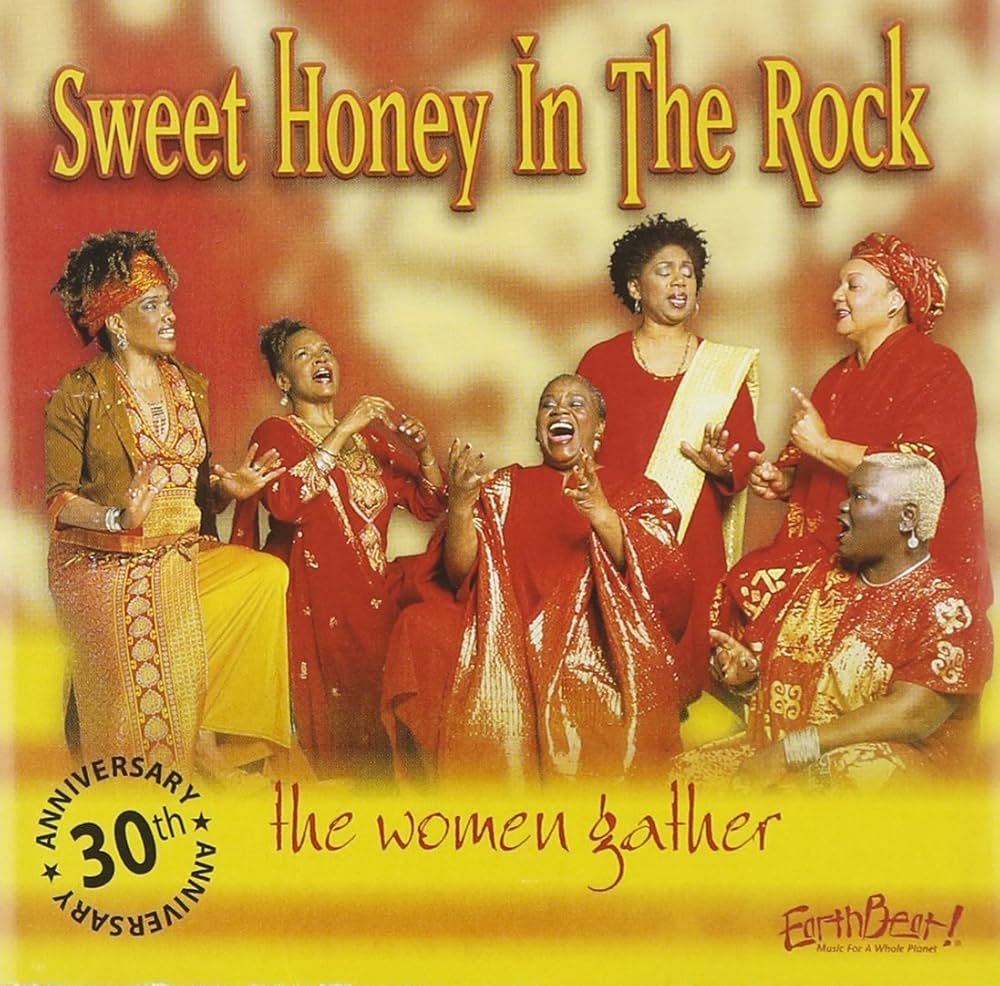
Bringing our musical journey closer to home, Wanting Memories was written by Washington, D.C. legend Dr. Ysaye Barnwell—a founding member of the iconic African American a cappella ensemble Sweet Honey in the Rock and a trailblazing artist determined to forge her own path and voice. CCW had the unique honor and privilege of sharing the stage and singing with Sweet Honey in the Rock in 2007. Performed tonight by our graduating seniors, the song’s poignant text serves as a perfect reflection for them as they transition into their next chapters, offering a beautiful dedication to the parents, mentors, and loved ones who have shaped their lives. Wanting Memories honors the roots, lessons, and community that stay with our singers long after they leave CCW.
We Will Do Miracles - Music by Dominick DiOrrio/Lyrics by Walt Whitman “Song of the Open Road” Text adapted from Walt Whitman
We will do miracles. We travel the open road, the world before us; all is beautiful.
You, air that serves us with breath to speak, to sing; You are our words. You, earth before us with possibility; You are a picture alive.
You express us, you reflect us, you are more to us than our words. You are our poem. You are our song! We will live here with you and do miracles! We are better than we thought. We are larger than ourselves. We are the possibility of the world.
Program notes by: Margaret Clark
Dominick DiOrio’s We Will Do Miracles is pure, unadulterated joy in musical form. Originally written to celebrate a children's choir anniversary, this piece is a high-energy explosion of rhythm and soaring melodies that shows off just how much power and excitement a stage full of young voices can create. From the very first note, the driving piano accompaniment pushes the music forward with a sense of bright, unstoppable optimism that is impossible to resist.
The words are adapted from Walt Whitman’s famous poem, Song of the Open Road. Whitman is a legendary American poet known for writing about the beauty of human connection, and DiOrio uses those words to send a beautiful message directly to our choristers. It’s a fierce, happy declaration that when we walk the same path together in community, "we will do miracles." It is the perfect, reminder to all of us of the extraordinary things our children can achieve when they lift their voices together.
The Times They Are A-Changin’ - words/music by Bob Dylan arr. Adam Podd
Come gather ‘round people wherever you roam. And admit that the waters around you have grown. And accept it that soon you’ll be drenched to the bone. If you time to you is worth savin’ And you better start swimmin’ or you’ll sink like a stone. For the times they are a-changin’.
Come mothers, and fathers through the land. And don’t criticize what you can’t understand. Your songs and your daughters are beyond your command. Your old road is rapidly aging. Please get out of the new one if you can’t lend a hand. For the Times they are a-changin’.
The line it is drawn the curse it is cast. The slow one now will later be fast. As the present now will later be past, The order is rapidly fading. And the First one now will later be last. For the times they are a-changin’.
Program notes by Christen Hernandez
Bob Dylan’s legendary 1964 folk anthem takes on a new life in this choral setting by Brooklyn-based arranger, and friend of CCW, Adam Podd. This arrangement for strings, piano, and upper voices reimagines the original piece through a sweeping, artistic lens bringing a profound sense of poignancy and reverence to these iconic words. As our choristers breathe new life into this powerful message that “the present now will later be past”, we are reminded that singing together can amplify the call for change across generations.
It Don’t Mean a Thing (If It Ain’t Got That Swing) - Edward Kennedy "Duke" Ellington (1899–1967) Lyrics by Irving Mills
[Chorus] It don't mean a thing, if it ain't got that swing, (Doo-ah, doo-ah, doo-ah, doo-ah, doo-ah, doo-ah, doo-ah, doo-ah) It don't mean a thing, all you got to do is sing, (Doo-ah, doo-ah, doo-ah, doo-ah, doo-ah, doo-ah, doo-ah, doo-ah)
[Verse] What good is melody, what good is music if it ain’t possession’ something sweet. What good is melody? What good is music? If it ain't possessin' something sweet? It ain’t the melody, it ain’t the music, There’s something else that makes the tune complete.
[Bridge] It makes no difference if it's sweet or hot, Just give that rhythm everything you've got!
[Chorus] Oh, it don't mean a thing, if it ain't got that swing, (Doo-ah, doo-ah, doo-ah, doo-ah, doo-ah, doo-ah, doo-ah, doo-ah)
Program notes by Margaret Clark
No celebration of Washington, D.C.’s rich musical heritage would be complete without honoring the city's most iconic native son, "Duke" Ellington. Born and raised in the U.S. capital, Ellington went on to become one of the most influential figures in jazz history, a prolific composer, and a legendary bandleader who fundamentally shaped American music.
Beyond its legendary status in the Great American Songbook, this piece bursts with the vibrant, sophisticated energy of the Harlem Renaissance and the syncopated pulse of Ellington's hometown roots. As we celebrate CCW's 30th anniversary, this timeless classic invites our choristers to trade traditional choral textures for standard jazz styling, scatting syllables, and pure, unadulterated groove. It is an exuberant reminder that across genres and generations, music must always have that vital, living pulse that makes your feet tap and your spirit soar!
INTERMISSION
I’ve Learned to Sing by Nolan Williams, Jr. Text by Georgia Douglas Johnson
Program notes by Nolan Williams, Jr.
I am honored to premiere this commissioned work celebrating the thirtieth anniversary of the Children’s Chorus of Washington.
The piece is inspired by and adapted from a poem by Georgia Douglas Johnson. Though born nearly a century apart, our paths share striking parallels: we are both naturalized Washingtonians—I was born in Los Angeles, she in Atlanta; we both studied music at Oberlin College; and we both share a commitment to using our art for social good.
For Georgia, that commitment found expression through her contributions to the Harlem Renaissance, her anti-lynching and civil rights advocacy, and her renowned “S Street Salon,” which served as a Washington, D.C. gathering place for Black writers, artists, musicians, and intellectuals. My artistic work,through music, theatre, film, publications, and programming, seeks to illuminate civil rights, social justice, and cultural identity.
How fortuitous that our fellow Obie, Margaret Clark, would become the connecting force bringing Georgia and me together. And how meaningful the message born from this pairing is for the artist-scholars of CCW.
That message is this:
Life is about learning how to sing—your own song. Even when your melody differs from those around you; even when some who hear it attempt to attach unkind labels or offer unwarranted commentary. Life is about gaining the confidence to sing your own melody with authenticity and conviction.
Life is about discovering synergy: learning how to sing with others and finding connection amid the polyphony of differing tunes and rhythms. Through that synergy, what may first sound like disparate notes of cacophony can ultimately become an uncanny symphony—one shaped by expressions and ideas that honor our distinctive voices.
Life is about finding love. Indeed, life is a journey toward love: love of self, love of family, love of others, love for that special someone—whoever that someone may be—and love of a higher power greater than ourselves, should we choose.
And when we open ourselves fully and wholeheartedly to love, our heart’s song changes—not entirely, for the essence of who we are and all that has shaped our journey remains. Rather, love transforms our song, giving it a different tone, a different meter. Above all, love becomes our source of direction, comfort, and peace, no matter the obstacles we face.
A final note about the title…
It is written in the present perfect tense, a tense that describes action that began in the past and continues into the present. By choosing this tense, the title affirms that our young choristers’ journey toward self-expression and freedom is not merely a future hope or dream. Rather, it is a reality already established—one that is continually being perfected and deepened here and now.
Laudate Dominum (from Vesperae solennes de confessore, K. 339)
Wolfgang Amadeus Mozart (1756–1791)
[Latin Text] Laudate Dominum, omnes gentes; Laudate eum, omnes populi. Quoniam confirmata est super nos misericordia eius, Et veritas Domini manet in aeternum.
Gloria Patri, et Filio, et Spiritui Sancto. Sicut erat in principio, et nunc, et semper, Et in saecula saeculorum. Amen.
[English Translation] Praise the Lord, all nations; Praise Him, all peoples. For His loving kindness has been bestowed upon us, And the truth of the Lord endures forever.
Glory be to the Father, and to the Son, and to the Holy Spirit. As it was in the beginning, is now, and ever shall be, World without end. Amen.
Program notes by Margaret Nomura Clark
Mozart composed his Vesperae solennes de confessore in 1780 during his final year of employment as court musician to the Archbishop of Salzburg. Among the setting's six movements, the breathtaking Laudate Dominum remains one of Mozart’s most celebrated and enduring sacred works. Rooted in the text of Psalm 117, the piece opens with an expansive, floating soprano solo of sublime simplicity. The chorus enters late in the movement, enveloping the soloist in a rich, warm setting of the Gloria Patri before transitioning into an exquisitely peaceful Amen.
For the Children’s Chorus of Washington, performing this masterpiece carries profound emotional resonance. The last time CCW presented Laudate Dominum, it was recorded as a virtual performance during the isolation of the COVID-19 pandemic, a project that kept our singers connected through music during a historic global crisis.
As we celebrate our 30th anniversary season, we are absolutely thrilled to bring this piece back to the live stage, fully realized in the shared acoustic space of a concert hall. Making this performance even more exceptional is the return of soprano soloist, Catherine Wethington. As a distinguished alumna and former CCW chorister, Catherine represents the enduring legacy, artistry, and community of our organization. We are overjoyed to welcome her back home to sing on stage with the current generation of CCW voices.
He Ain’t Heavy, He’s My Brother
The road is long with many a winding turn. That leads us to who knows where. Who knows where- But I'm strong. Strong enough to carry him He ain't heavy, he's my brother
So on we go His welfare is of my concern No burden is he to bear We'll get there
For I know He would not encumber me He ain't heavy, he's my brother
If I'm laden at all I'm laden with sadness.That everyone's heart- Isn't filled with the gladness. Of love for one another
It's a long, long road
Program notes by Don Cotton
Originally recorded by Kelly Gordon in 1969, the song became a worldwide hit for The Hollies later that year, and again for Neil Diamond in 1970. The origins of the title are found in a book, The Parables of Jesus, written in 1884 by James Wells, Moderator of the United Free Church in Scotland. The book includes the story of a little girl carrying a big baby boy. Seeing her struggling, someone asked if she wasn't tired. With surprise she replied, "No, he's not heavy; he’s my brother." In the 1940s, the words, adapted as "He ain't heavy, Father, he's my brother", were taken as a slogan for Boys Town children's home by founder Father Edward Flanagan. These words also express the support and brotherhood that YME experiences at every rehearsal and concert.
Make Me an Instrument of Peace - Premiere commission Ben Rowarth
Lord, make me an instrument of your peace. Where there is hatred, let me sow love; Where there is injury, pardon; Where there is doubt, faith; Where there is despair, hope; Where there is darkness, light; Where there is sadness, joy.
O Divine Master, grant that I may not so much seek To be consoled as to console, To be understood as to understand, To be loved as to love.
For it is in giving that we receive; It is in pardoning that we are pardoned; And it is in dying that we are born to eternal life.
Program notes by Don Cotton
What an honor to be debuting this commissioned piece by Ben Rowarth. In recognition of my 30 years with CCW I was able to choose the text for this original work. In my early years as principal accompanist I first encountered these words when we were preparing the Treble Chorus for a concert with The Canadian Tenors. One of the songs happened to be an arrangement of Make Me An Instrument of Peace. I was so moved by the words of the song that I have embraced this text as a hopeful reminder to all that no matter what we encounter in life, may we always strive to give others comfort, hope, love, and peace, especially through the gift of music.
From Ben Rowarth
‘Make Me An Instrument’ was written in honor of Don Cotton and the 30 years of amazing work he has done at Children’s Chorus of Washington. The piece juxtaposes two polyphonic sections, where the words and music are realized through individual lyrical lines, and two homophonic sections, where the poetry is set with clear compact chords. Look out for moments of musical word painting throughout: the sudden stop of all singers and piano that follows the phrase “where there be silence”; the unusual harmonic progression that almost gives a sense of the singers fumbling through the lines that describe blindness and darkness then to resolve with the phrase “let me bring light”; and the gradual fade away of the chords at the end of the piece setting the line “it is in dying we’ll be released”.
Don’t Go Alone - Music and lyrics by Sara Curtin
Program notes by Sara Curtin
I couldn’t be more excited to premiere this new arrangement of my song “Don’t Go Alone” today with the Children’s Chorus of Washington. I composed the choral vocals specifically for them on this magnificent 30th Anniversary. As a founding member of the chorus in 1995-96, it fills my heart with such joy to be collaborating with the organization that was so fundamental to my music education.
"Don't Go Alone" is the title song on my most recent 2025 EP release. The songs on this EP were born from my experience as a mother raising joyful, adventurous children while also bearing witness to the unspeakable suffering in our world today due to violence and hatred. I wrote “Don’t Go Alone” as a response to personal conversations with folks in my community who feel particularly vulnerable as a result of intolerant and targeted policies by our government. Songwriting is my way of channeling both heartbreak and indignation into messages of empathy, and prayers for a strong community rooted in love and shared humanity.
How Can I Keep From Singing?
Program notes by Joan Gregoryk
This old Quaker hymn dating from the 1800’s has, for obvious reasons, been a favorite song for me. In this arrangement, Gwyneth Walker emphasizes the celebratory and life-affirming aspects of the song, through her dynamic score markings. I felt it was a perfect song to celebrate our 30th Anniversary Season.
Community Sing with Micah Hendler
For over three decades with the iconic a cappella ensemble Sweet Honey in the Rock, Washington, D.C.’s own Dr. Ysaye M. Barnwell (b. 1946) has shown the world that the human voice is our ultimate tool for connection, joy, and community. Dr. Barnwell beautifully reminds us that you don't need a perfect voice to create something beautiful, you just need a willingness to share your energy with the people around you.
As we celebrate CCW's 30th anniversary, we want to honor the incredible community that has supported us every step of the way. Today, we are tossing out the old rulebook that says an audience has to sit quietly in the dark! We invite you to join us in a joyful, collective experience that will bring this hall completely alive in harmony.
Al Shlosha D’Varim - Music By Allan Naplan - Text from Pirkei Avot (Jewish morality laws)
The world is sustained by three things: Truth, Justice, and Peace
Program notes by Margaret Nomura Clark
Over the years, the piece has officially become the Children’s Chorus of Washington’s anthem, serving as a musical blueprint for the values of community and compassion we cultivate in our singers.
It is a cherished CCW tradition to close our concerts with this song, bringing together all current choristers and returning alumni on stage to form one massive, multigenerational choir. This ritual does far more than just end the performance; it rekindles the unbreakable bond forged through years of shared music-making and allows us to reflect on the decades we have spent together in song. It is a powerful, full-circle moment that celebrates our rich history, honors our enduring community, and unites our past and present in a spectacular wall of harmony.
My Song- Music by Erik Esenvalds
Text by Rabindranath Tagore (1861-1941)
Poetry by Rabindranath Tagore
This song of mine will wind its music around you, my child, like the fond arms of love. This song of mine will carry your sight into the heart of things., like the faithful star overhead when dark night over your road.
My song will take you to the verge of unknown. When you are in a crowd it will surround you with its strength. When you are alone it will stay by your side like a faithful star in the dark night over your road!
My song will be like a pair of wings to your dreams, like a fond of arms of love it will wind its music around you. And when my voice is silent, my song will live in you.
Program notes by Margaret Nomura Clark
There could not be a more perfect culmination for our 30th anniversary season than Latvian composer Ēriks Ešenvalds’ breathtaking masterpiece, My Song. This piece carries a profound resonance for our community. It encapsulates the very core of our mission: the understanding that the music we plant in the hearts of our choristers is a lifelong gift. Long after our singers leave the CCW stage, these songs remain woven into the fabric of who they are. This performance is an emotional celebration of every voice that has shaped our 30-year history, and a beautiful promise that as our voice falls silent at the end of this concert, our song will continue to speak in the living hearts of our singers for generations to come.